G C Restoration Fairview
📞 201-510-5437
Property Damage Restoration Edison Township, NJ
24/7 Emergency Response

Fire Damage Restoration in Fairview.

Kitchen flare-ups through full structure fires — restoration scope built around what is salvageable vs what insurance will replace.

📞 201-510-5437 Local team in Fairview 24/7 dispatch
Equipment Industrial extraction + drying
Documentation Daily logs adjusters approve
Trades Reconstruction handled in-house
Service Overview

How We Approach It

The "house seems fine, just smells smoky" calls are deceptive. Soot has migrated through the whole HVAC system, settled in attic insulation, and contaminated content far from the fire origin. We scope the full structure, not just the visibly damaged room.

What's Included

  • Soot + smoke odor removal
  • HVAC decontamination
  • Pack-out + content cleaning
  • Hydroxyl odor treatment
  • Structural rebuild
  • Insurance-scope documentation

How Fire + Smoke Damage Actually Spreads Through a Property

The fire department's job is to put the fire out. They do it well. What they leave behind is the start of the restoration job — and the damage that determines the eventual claim size has very little to do with the visible burn area.

Soot is acidic and moves on air currents. While the fire was burning, the HVAC system likely circulated soot-laden air through every room of the structure. Soot settled on horizontal surfaces, infiltrated upholstery and carpet fibers, and coated the inside of ductwork. Heat caused volatile organic compounds in plastics, fabrics, and finishes to off-gas, and those compounds redeposited on cooler surfaces as a sticky odor-bearing residue that does not wash off.

Our scope addresses each: HEPA vacuuming of horizontal surfaces, dry-chem sponge cleaning of walls and ceilings, HVAC duct cleaning per NADCA standards, content pack-out for items that need shop-cleaning, and hydroxyl or ozone treatment for porous materials in the affected envelope. None of this is optional — skipping any phase leaves residual odor that returns within weeks.

HVAC Decontamination — the Step Most Restorers Skip

If smoke entered the HVAC system, the system needs to be cleaned per NADCA (National Air Duct Cleaners Association) standards before re-occupancy. Soot inside ductwork acts as an odor reservoir — every time the HVAC runs, it pushes that residue back into the living space. Owners report "the smoke smell came back" weeks after restoration. The reason is almost always that the ducts were not properly cleaned.

Our HVAC scope: source removal (HEPA vacuuming of supply + return ducts), antimicrobial treatment, replacement of any porous duct insulation that was contaminated, and replacement of the air handler filter + any disposable components. We document with before/after photos at multiple inspection points so the carrier sees the work was actually completed and not just billed.

For homes with old ductwork that was already in marginal condition before the fire, we will tell you honestly when replacement makes more sense than cleaning. The decision drives a different scope, different timeline, different insurance discussion — better to know on day one than discover after a partial cleaning that the system needs replacement anyway.

Process

Our Process

  1. 01

    24/7 Dispatch

    Live answering service routed directly to dispatch. Most Fairview addresses see a truck within 60 minutes of the call.

  2. 02

    IICRC S500 Protocol

    Loss category established (Cat-1, Cat-2, Cat-3) on first inspection. Protocol matched to category — no shortcuts on contaminated water cleanup.

  3. 03

    Industrial Drying

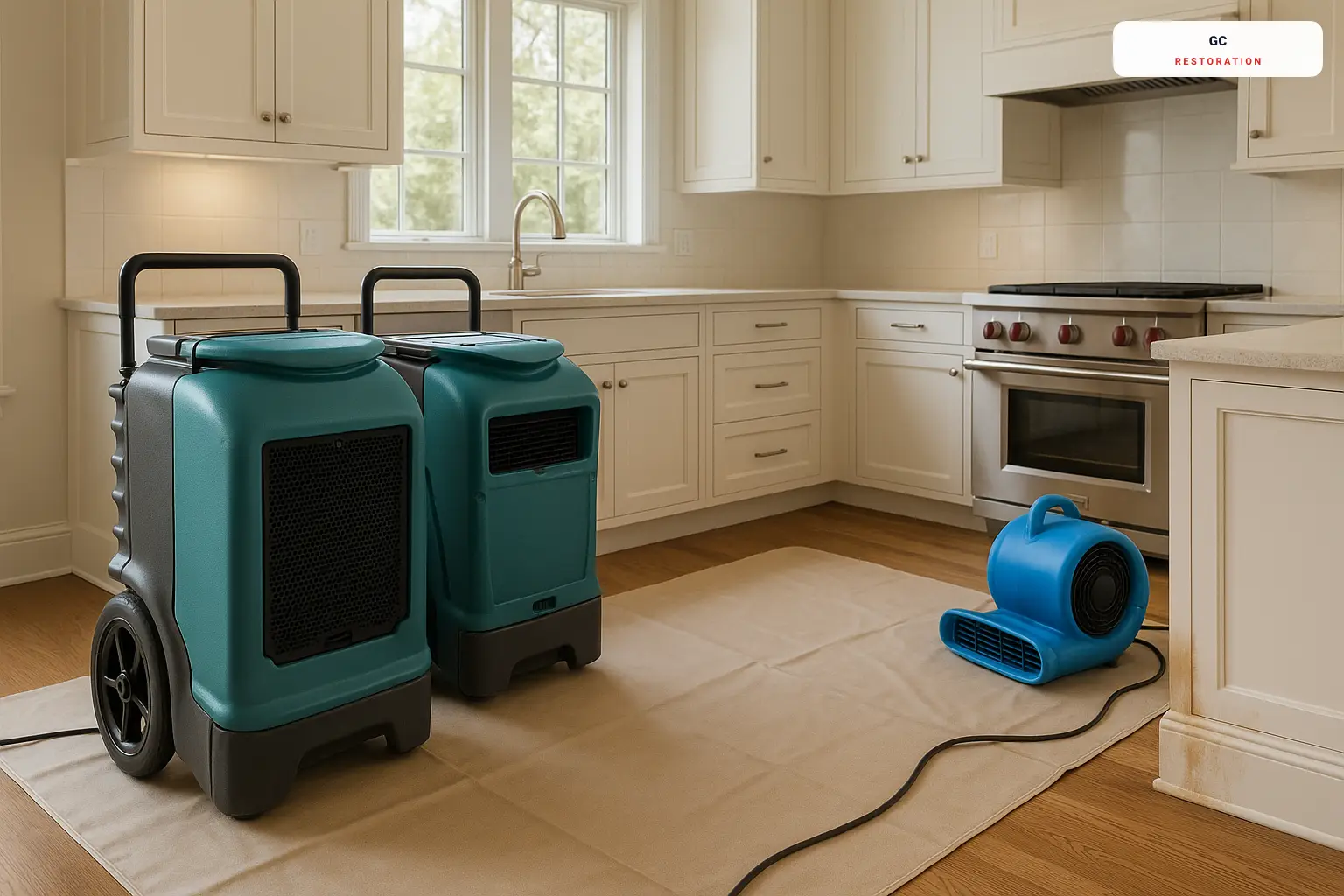
    Truck-mounted extraction, high-velocity air movers, LGR dehumidification, HEPA-filtered negative air when needed. Equipment sized to the loss, not under-spec to save cost.

  4. 04

    Verified Moisture Clearance

    Final clearance readings on every substrate before reconstruction starts. We do not close the mitigation phase on "looks dry" — we close it on documented moisture content at baseline.

  5. 05

    Single-source Reconstruction

    Rebuild scope mapped directly from mitigation documentation. No contractor handoff, no scope renegotiation, no surprise costs three weeks in.

24/7 Emergency

Emergency restoration dispatch from Fairview — answering 24/7.

We dispatch a tech 24/7 across the Fairview metro. Average on-site time is under an hour.

Call 201-510-5437
The difference

Why Customers Choose Us

Real reasons. No invented stats, no manufactured awards.

  • 01

    24/7/365 Emergency Response

    Holidays, weekends, middle of the night — same response standard. Property losses do not check the calendar. Neither do we.

  • 02

    Multi-Unit + Commercial Capable

    COIs on file at most major Bergen County multi-unit buildings. After-hours noise scheduling for tenant-occupied commercial. Per-unit documentation discipline for HOA + condo claims.

  • 03

    Pre-Staged For Surge Events

    Storm season we add equipment + tech capacity at our Fairview base. When the call volume spikes after a major weather event, individual response times do not slip.

Service Area

Serving Bergen County

From our Fairview base we cover Bergen County and the immediately surrounding NJ municipalities. Sub-hour response on active losses, pre-staged equipment for storm season, IICRC-standard methodology applied to every job regardless of size.

Counties Covered

  • Bergen County, NJ

Cities We Service

Each Bergen city below opens a local page with arrival times from our Fairview base and the loss patterns we handle most often in that municipality.

Not sure if you're in our area? Call 201-510-5437 and we'll tell you in 30 seconds.
FAQ

Frequently Asked Questions

If you don't see your question, just call or message us.

What is a backwater valve and do I need one? +

A backwater valve is a one-way valve installed in your main lateral drain that closes if sewer pressure tries to push water back into your basement. Cost is $1,500-$3,500 installed. For Fairview properties on combined sewer or older municipal systems, it is the single most effective sewer-backup prevention measure. We can refer to qualified plumbers if you want one installed.

How do you remove smoke odor after a fire? +

Smoke odor lives in porous materials at the molecular level — air freshener does not work. We use hydroxyl generators (safe for occupied spaces, breaks down VOCs over 3-7 days), ozone treatment (faster, requires evacuation), thermal fogging, and source removal for materials that cannot be deodorized. Air quality testing verifies odor levels return to baseline before reconstruction.

Does insurance cover sewer backup? +

Standard homeowners insurance does NOT cover sewer backup. The fix is a sewer/water backup endorsement on your policy, typically $50-150/year. Coverage is usually $5,000-$25,000 depending on the limit you select. If you have not added the endorsement, the cleanup is out-of-pocket. Add it now to protect against future events.

What should I do in the first hour of a water emergency? +

Shut off the water at the main if you can locate the source. Kill power to the affected area at the breaker if water is reaching outlets. Move what you can save away from the cascade path. Photograph the loss in its current state for insurance. Then call us — we are mobilizing while you are still on the phone.

Can you save my hardwood floors after water damage? +

Often yes, if we get there fast and the wood has not been wet for an extended period. Our protocol: extract surface water, run targeted air movement under the floor (we use specialized hardwood drying mats), monitor moisture content with pinless meters that do not leave marks. If readings come back to dry standard, the floor is salvageable. If not, replacement is the right call — we tell you honestly which one applies.

What is IICRC S500 and why does it matter? +

IICRC S500 is the industry standard for water damage restoration — published by the Institute of Inspection, Cleaning and Restoration Certification. It defines water categories (Cat-1 clean, Cat-2 grey, Cat-3 contaminated), drying standards (moisture readings to baseline), and protocols for each. Restorers who follow S500 produce work that holds up. Restorers who skip it produce work that fails inspection or grows mold within months.

Do I have to leave my home during restoration? +

For most water-damage jobs, no. We work in the affected area while you live in the rest of the home. Cat-3 sewage cleanup requires evacuation of the affected area during the cleanup phase because the work itself aerosolizes pathogens. Major fires often require temporary relocation while smoke + soot are addressed. We discuss displacement on the first call so you can plan.

Call Now • Fairview

Active Loss in Fairview? We Handle Mitigation Through Reconstruction.

One phone call gets a truck rolling. Real Fairview team, real local response time, no automated phone tree. We'll be on site fast.

📞 Tap To Call 201-510-5437

24/7 Emergency Dispatch

📞 Call 201-510-5437